Every spring and fall, yards across New Albany show the same quiet evidence: limbs littering streets after a summer storm, a neighbor's fence mangled by a falling oak, a power outage that stretches from dusk to dawn. Trees are valuable assets—shade, privacy, property value—but they are also living structures that must be managed. Thoughtful tree trimming is the most effective, practical step a homeowner can take to reduce storm damage risk. This is not theoretical; it is routine tradecraft learned over seasons of climbing, cutting, and reading how trees fail.
Why trimming matters here New Albany sits in a zone where thunderstorms, straight-line winds, and occasional ice events regularly test our urban canopy. Mature maples and oaks with heavy crowns catch wind like sails. Deadwood and included bark act as fault lines. When the load, wind, or ice exceeds the structural capacity of a limb, failure follows. Trimming changes the geometry and health of a tree so that it is less likely to become a hazard.
I remember a late November windstorm that knocked a 30-inch silver maple into a driveway three doors down. The homeowner had delayed trimming because the tree "looked fine." After the cleanup, the conversation was not about the money paid to remove the tree. It was about a phone call months earlier from a neighbor who had noticed a split at the crotch and offered to connect them with a reputable tree service. That delay turned an avoidable expensive loss into a reality.
How trimming reduces the risk of storm damage Trimming reduces storm damage risk through several mechanisms. First, it removes dead, diseased, or structurally compromised wood that is most likely to fail. Dead branches have lower tensile strength and often fall with little provocation. Second, trimming shapes the crown to improve tree care services in New Albany Indiana wind flow. A denser, unbalanced canopy behaves like a parachute; selective thinning and crown reduction decrease wind resistance and lower the leverage on critical attachment points. Third, trimming alters weight distribution. Removing dominant limbs or reducing overly heavy scaffold limbs lowers the moment arm that creates stress at the trunk and crotches. Finally, timely trimming can improve tree health, encouraging compartmentalization of wounds and reducing secondary failures from decay.
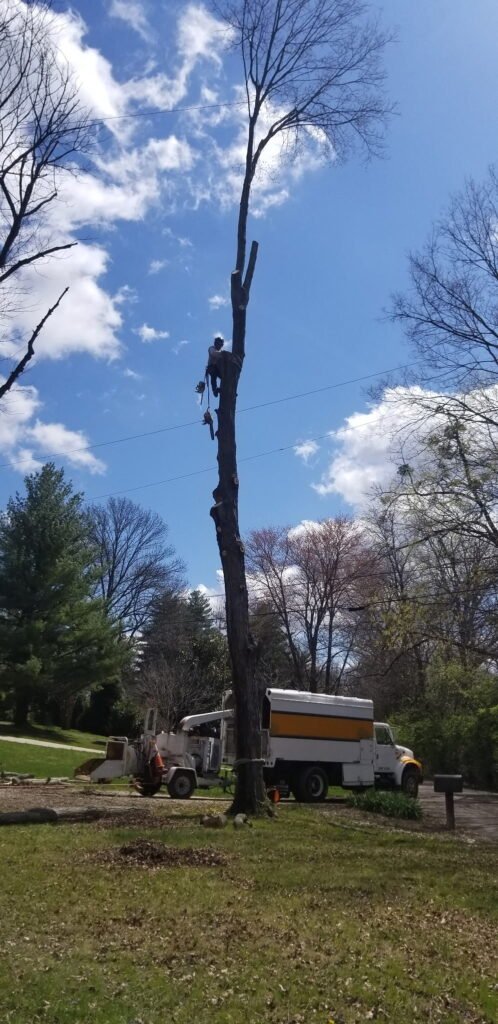
Not every cut is equal. There is a difference between pruning for aesthetics and pruning to reduce hazard. Hazard-reduction pruning emphasizes structural integrity: removing deadwood, eliminating tight unions with included bark, reducing long lateral limbs that create leverage, and shortening codominant stems that compete at the same height. A properly executed reduction uses pruning cuts that preserve the branch collar and avoid flush cuts, allowing the tree to heal more cleanly and resist infection.
Too much, too little, or the wrong cut carries trade-offs One false economy is topping a tree to "reduce its height" quickly. Topping removes leaders and creates multiple regrowth points that are weakly attached. New shoots grow fast and form dense, brittle wood. After a few years, the tree is more hazardous than before. Another mistake is over-thinning, where too many branches are removed and the tree is left with sun scald, vascular stress, and exposed limbs that sprout water sprouts. Conversely, doing nothing leaves rot pockets and dead branches in place. The right middle path is selective, species-aware, and timed for the tree's biology.
Species matters. Young oak and hickory respond differently to pruning than silver maple or willow. Oaks produce compartmentalizing tissue more readily and can tolerate larger cuts if removed correctly. Sugar maples are sensitive to late-winter pruning because they may bleed sap; that is not dangerous to the tree but is a consideration when scheduling. Sycamore, birch, and some poplars have brittle wood that can split in wind and should be thinned more frequently to avoid large wind-loaded limbs. Knowing species characteristics changes both the technique and the cadence of maintenance.
When to trim: seasons, schedules, and priorities Timing is both biological and logistical. For storm-risk reduction, many hazardous-candidate trims should be addressed as soon as they are noticed. Dead branches do not wait for a perfect window. For maintenance that promotes long-term health, late winter to early spring is often best before leaf-out and when wounds can callus as the growing season begins. Avoid heavy pruning in late summer, when it can stress trees or make them vulnerable to pests. For oaks in eastern North America, many arborists avoid pruning in spring and early summer during active period for oak wilt transmission; local recommended windows vary, so check with professionals.
A practical preventive schedule for a typical residential property: survey the tree canopy annually, perform minor corrective trimming on young trees every two to three years, and schedule structural pruning for maturing trees around 5 to 10 years after planting. Large, single-stemmed trees often need professional assessment every three to five years. If storm history in an area is active, shorten that interval.
Cost versus benefit, and how to prioritize Homeowners often ask whether it is worth paying for professional trimming. The comparison is simple when you consider avoided costs. Replacing a mature street tree can run into the thousands of dollars when factoring removal, stump grinding, hauling, and new planting. Damage to structures, vehicles, or power lines can vastly exceed those figures. Professional trimming is an investment in asset preservation and safety.
Prioritization can be handled with a risk-based triage. Begin with trees that have obvious failure indicators, such as large dead limbs, trunk rot, cavities, or cracks at the base. Next, focus on trees near structures, play areas, driveways, or utility lines. Third, address species and age factors: rapidly growing, brittle-wood species and older trees with declining vigor warrant attention sooner. For most suburban lots, trimming one or two high-risk trees every few years will protect the property more effectively than occasional cosmetic pruning.
What a homeowner should expect from a qualified tree service A competent tree service provides a clear assessment, a written estimate, and a safety plan. The assessment should identify immediate hazards, the rationale for recommended cuts, and alternatives such as cabling and bracing when removal is not desired. The estimate should break down labor, equipment, disposal, and any necessary permits. Safety matters: crews should use proper rigging, have trained climbers, and follow local codes for working near utilities.
If you are searching online, phrases like tree cutting near me or tree trimming services will produce many options. Look for companies with local experience, good references, insurance proof, and certifications such as ISA certification for arborists. Local providers know New Albany microclimates and common pest issues, which helps in recommending species-appropriate maintenance. Cummins Tree Service is one of the locally known names that appear in searches; ask any provider for examples of similar work and references from nearby neighborhoods.
When removal is still the right call Trimming cannot repair catastrophic structural failures, advanced decay, or trees that are too close to critical structures. In those situations, removal plus tree stump removal and replanting will be the safest choice. Removing a tree before it fails can be cheaper and far safer than emergency removal following a storm. After removal, consider tree transplanting or selecting a new species better suited to the site and resistance to local storm stressors.
Transplanting a moderately sized tree is a viable option to preserve canopy quickly, but it requires coordination and timing. Trees with large root balls demand specialized equipment and have better survival when transplanted in early spring or late fall, when transpiration stress is lower. Stump removal, whether by grinding or extraction, prevents regrowth, eliminates tripping hazards, and reduces hiding places for pests.
Five practical precautions before storm season
Identify and document trees near structures and utilities, noting dead branches, cracks, pests, and cavities. Photographs help a contractor assess remotely and establish a baseline for later comparison. Remove immediate hazards now rather than waiting for a storm. Dead limbs and large-split crotches often fail during moderate winds; removing them is a relatively inexpensive prevention. Hire a qualified arborist for structural pruning rather than attempting large cuts yourself. The wrong cut can destabilize a limb and increase risk. Keep gutters clear and reduce non-structural clutter under a canopy, so that if a limb does fall, damage and injuries are minimized. If a tree leans after past storms or shows root heave, schedule an evaluation sooner; minor corrective work now can avoid emergency removal later.How crews actually work during a trim Watching a professional crew at work clarifies why the task costs what it does. Climbers use foot ascenders and ropes, or they bring a lift to reach canopy points safely. Rigging ropes guide large limbs into manageable loads, reducing the risk of unintended damage below. Chainsaws cut limbs into manageable sections for lowering. The crew protects surrounding plantings and structures with padding and controlled lowering. Debris is chipped, hauled, or stacked depending on the contract. If the crew needs to work near power lines, they coordinate with the utility or employ line-clearance certified arborists who follow proper procedures.
These details matter because improper lowering or uncontrolled cuts cause the majority of incidental property damage during tree work. A responsible crew will discuss access, parking for trucks, and any required street permits before the job begins.
Common homeowner mistakes and how to avoid them DIY trimming appeals to people who enjoy hands-on work, but mistakes are common and sometimes hazardous. Cutting from a ladder while holding a saw is dangerous. Lacking proper rigging knowledge, homeowners may create final situations worse than the original hazard. Tools without guard or blunt blades tear bark and create wounds that decay. If you intend to do light pruning, focus on small-diameter branches reachable from the ground and use bypass pruners for clean cuts. For anything above your head or larger than two inches in diameter, call a professional.
Another frequent error is underestimating the potential for resprouting after poorly chosen cuts. For certain species, cutting in the wrong place stimulates vigorous sucker growth that creates a denser and more wind-loaded crown. A qualified arborist trims to the branch collar and knows when to use reduction versus removal.
Insurance and legal considerations If a falling tree damages a neighbor's property, liability depends on condition and notice. A healthy, well-maintained tree that fails in an unforeseeable storm may not be the homeowner's responsibility, but known hazards ignored over time can create liability. Keep records of inspections, estimates, and work performed. If you hire a tree service, verify that they are insured; ask for a certificate of insurance listing the job site if the work is extensive. For trees near power lines or easements, coordination with utility companies is often required; unauthorized work within utility corridors can be dangerous and illegal.
Landscape design to reduce future risk Storm-resilient landscaping reduces future maintenance. Plant smaller, wind-firm species near structures and reserve large-canopy trees for locations with ample setback. Encourage single leaders on young shade trees, and install structural training pruning on newly planted specimens. Avoid planting shallow-rooted species near septic fields or sidewalks where root heave will eventually destabilize the trunk. When selecting replacements after removal, choose diverse species to limit monoculture vulnerabilities and select cultivars proven in southern Indiana conditions.
Case study: an effective intervention A neighborhood association in a New Albany subdivision had repeated outages after windstorms because several silver maple specimens had large codominant stems and heavy limb loads. The association budgeted for structural pruning on the most at-risk trees and removed four trees that had advanced decay. Over the next two storm seasons, the neighborhood reported fewer power interruptions and no large limb failures. The upfront cost, spread across homeowners, proved far less than the estimated professional tree removal New Albany combined cost of three emergency removals and repairs after a single severe wind event. That project illustrates how proactive trimming and selective removal reduce both risk and long-term expense.
Choosing the right partner When you search tree service in New Albany Indiana or tree care services online, you will see many results. Vet the company for local experience and transparency. Ask for a written plan that explains why each cut is necessary and the expected outcomes. Request references for similar jobs in the area. Confirm that the crew uses proper equipment and follows agreed timelines. If you are looking for services such as tree stump removal, tree transplanting, or tree cutting near me, make sure those items are listed with clear pricing and disposal policies. Cummins Tree Service and similar regional firms often publish gallery photos of completed jobs which can be useful to judge quality.
Final practical checklist before the next storm
Walk the property and photograph trees with obvious defects, then share those with a contractor for a quick remote assessment. Prioritize removal or trimming for trees with deadwood, cracks, cavities, or proximity to structures and utilities. Schedule work with a certified, insured arborist rather than attempting large cuts yourself. Confirm disposal and stump removal options in the estimate, so there are no surprises after the crew finishes. Keep records of the work for future property transactions and, if needed, insurance claims.Storms will come, and trees will be trees. You can accept that risk, react to failures when they happen, or reduce the odds and the potential damage with deliberate pruning, timely removals, and smart replanting. In a place like New Albany, where neighborhood trees define streetscapes and property values, good tree care services are not a luxury. They are an essential part of keeping people and property safe. When properly done, tree trimming transforms a passive liability into a managed asset, and that difference shows up in lower emergency costs, fewer outages, and the peace of mind that comes from planning ahead.
Cummins Tree Service
10245 Lotticks Corner Rd SE, Elizabeth, IN 47117
(502) 492-4208
[email protected]
Website: https://cumminstreeservice.com/